
Embodied Ruins
Before history is explained, it’s encountered.
The body enters first. Feet adjust to uneven ground. Air thickens slightly. Sound shifts. The path narrows. Stone appears through growth, not as a monument, but as a remainder.
There’s no clear beginning to a ruin. It doesn’t announce itself. It emerges gradually, through textures, stillness, and subtle atmospheric changes.
When I began making this video essay, I wasn’t interested in explaining history in a conventional sense. I was more drawn to how history is felt before it is understood. We often locate memory in archives, dates, records, and official narratives. But memory also settles elsewhere: in material, in temperature, and in the way light falls across a broken surface.
Meaning doesn’t always arrive through explanation. Sometimes it emerges through duration, through staying, through inhabiting.
Atmosphere over explanation
A key influence on this approach was John Akomfrah, particularly Mimesis. His work doesn’t explain war, it stages it in fragments. Archival images, reconstructed gestures, bodies suspended in landscapes that feel both historical and immediate.
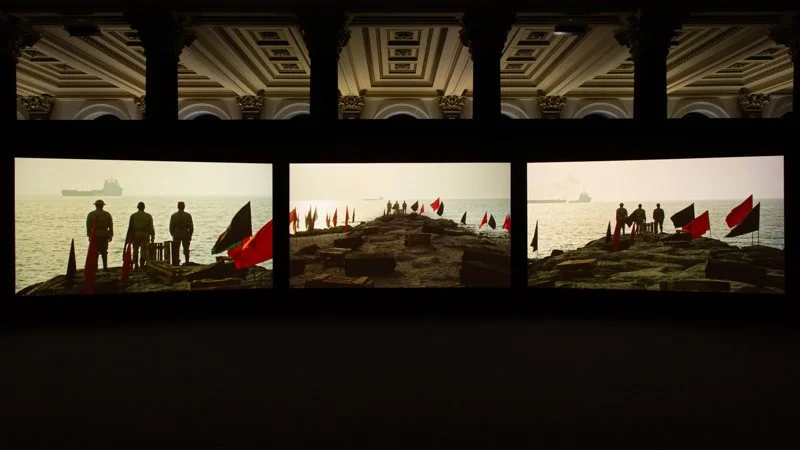
There’s no stable timeline. No authoritative voice. Instead, atmosphere, a choreography of absence.
History appears as something half-remembered. Not fully documented, but deeply felt.
This shaped the structure of my essay. Rather than guiding the viewer through a fixed narrative, I worked through juxtaposition, layering images, pacing rhythm, and allowing silence to carry weight. I wanted history to feel spatial. Not something you simply watch, but something you stand within.
The site as an accidental archive
The essay is grounded in Kennall Vale.
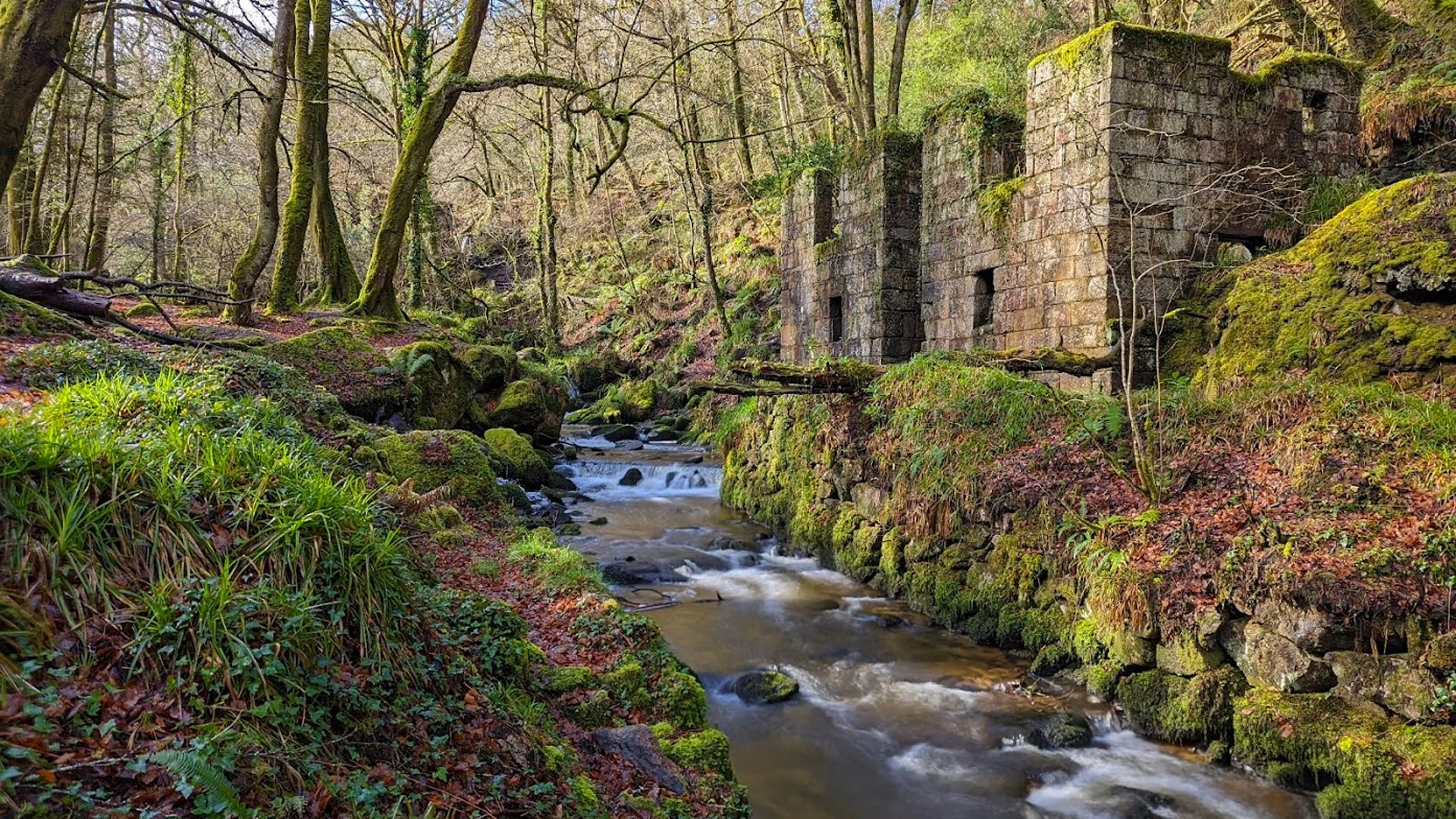
Once engineered for gunpowder production, it was a site defined by precision, containment, and risk. Architecture was designed to manage explosions. Labour was structured around danger.
Now, that intention has dissolved.
Nature weaves itself into brickwork. Water moves through what was once mechanical. The site no longer declares its function, it suggests it. Absence becomes part of the structure.
What was once built to contain combustion now contains time.
Here, the ruin becomes what I think of as an accidental archive, not preserving information in a formal sense, but sustaining encounter. It allows the past to remain unresolved.
Theory under pressure
In developing the theoretical framework, I returned to Gaston Bachelard and The Poetics of Space. His writing centres on intimate environments, corners, rooms, thresholds, as spaces that nurture memory and reverie.
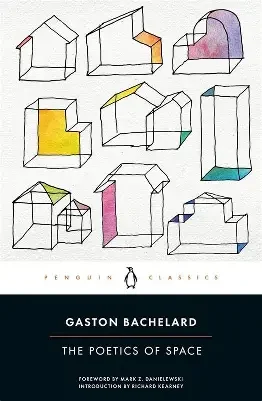
Initially, this offered a way to understand how environments might hold memory gently, even protectively.
But applied to Kennall Vale, this idea began to fracture.
This is where the work shifted. Rather than confirming Bachelard’s theory, the site resisted it. A landscape shaped by industrial labour and risk does not easily cradle memory. It unsettles it. The idea that space shelters experience becomes fragile in a place engineered for explosion.
This tension became productive, a kind of friction between theory and site. It allowed me to question whether phenomenology can ever be universal, or whether it is always contingent on the conditions of a space.
Sensing space
Alongside this, Peter Zumthor’s Atmospheres helped refine how I approached the sensory dimension of the work.
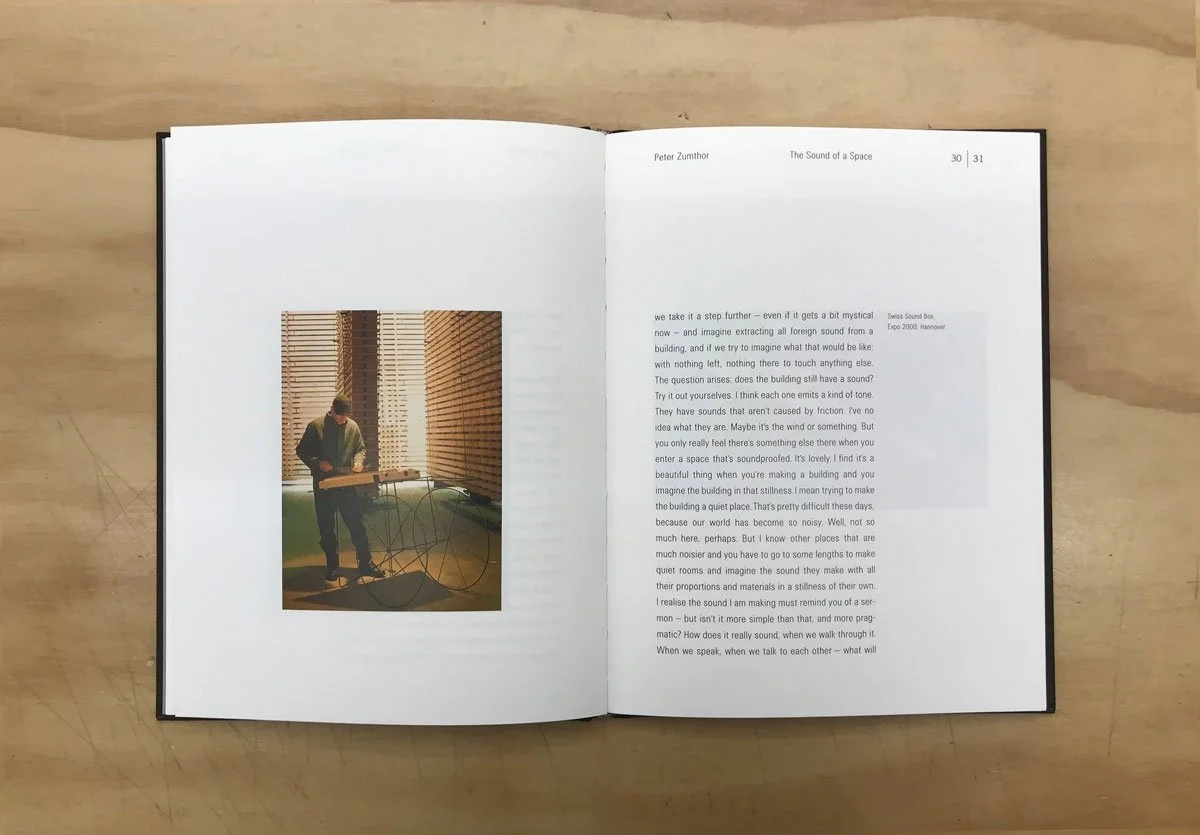
Zumthor focuses on how environments are felt through light, sound, material, and temperature. This shifted my attention away from analysing the site visually, and toward experiencing it bodily.
Dampness, stillness, acoustic shifts, these became central.
It also influenced how I edited the video. Rather than explaining the space, I tried to let it unfold slowly through tone and pacing. Meaning isn’t fixed within the site; it emerges through interaction, through presence.
This reinforced my understanding of memory as something dispersed, not contained neatly in archives, but carried through atmosphere.
Ruin as process
Christopher Woodward’s In Ruins further shaped how I understood the site.
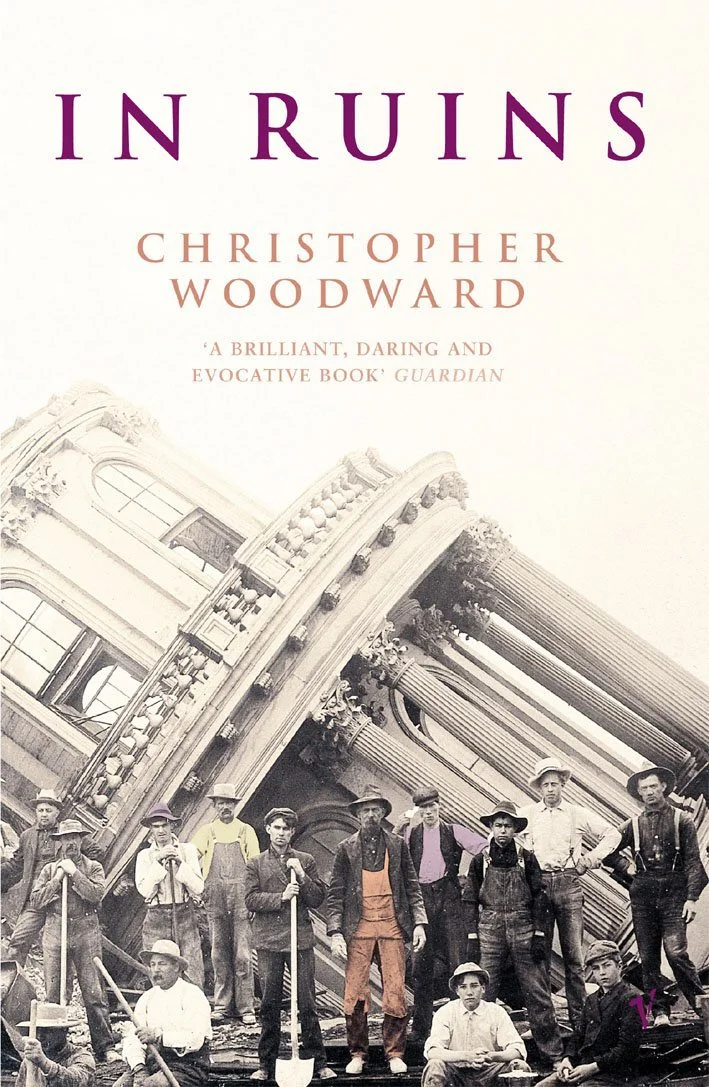
Woodward describes ruins not as static remnants, but as evolving spaces, constantly shifting in meaning and form. This was crucial in moving away from seeing Kennall Vale as a fixed historical object.
Decay is not an end state. It is a process.
This supported my idea of the ruin as an accidental archive. Memory here is not preserved intact, but dispersed, across surfaces, through erosion, through time. The past is not sealed off; it remains active, open, and unresolved.
Bodies as archives
This thinking also connects with the work of Pauline Boudry and Renate Lorenz.
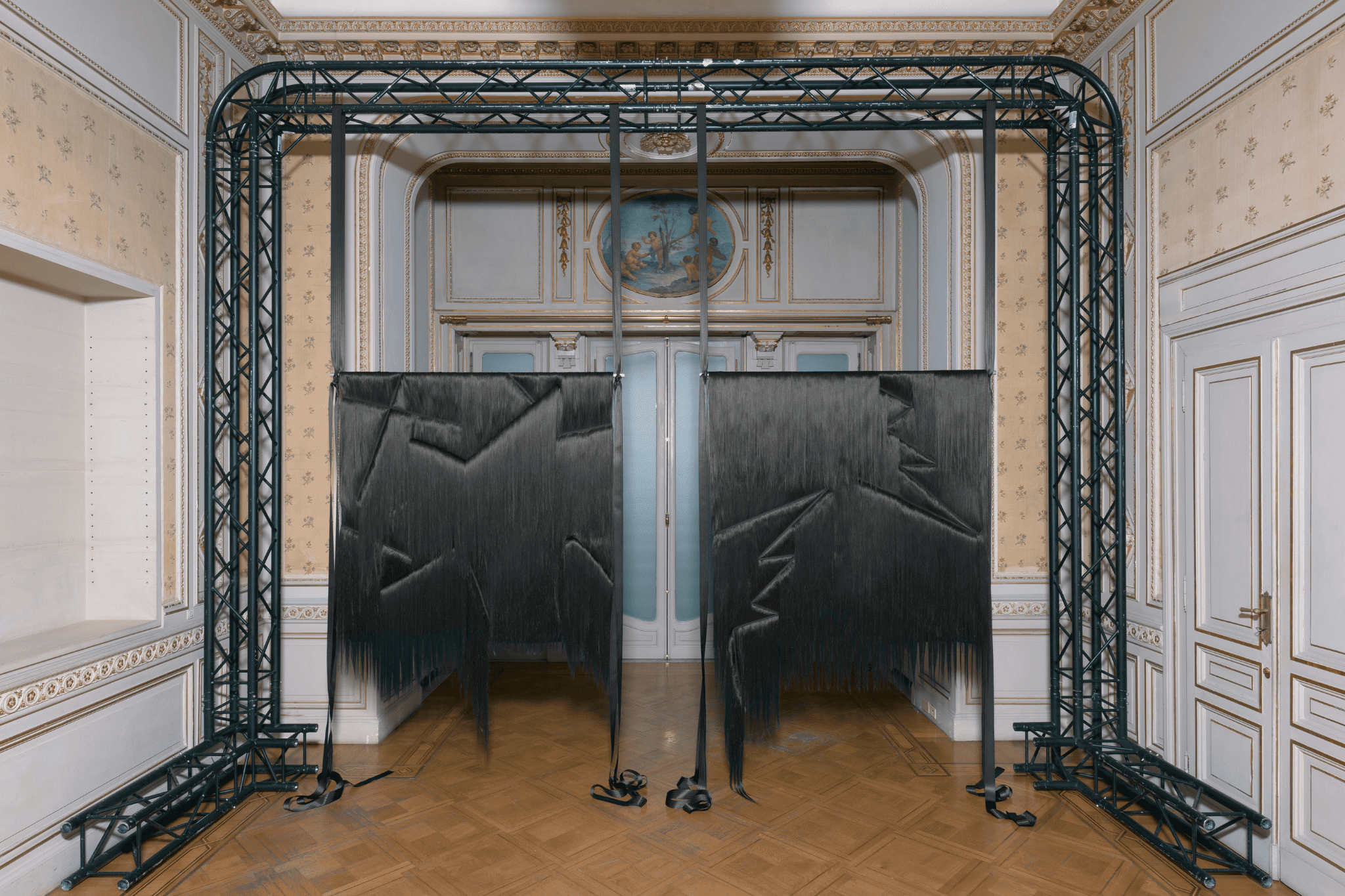
In their installations, history isn’t retold, it’s performed. Bodies move slowly through staged environments. Light falls on skin. Sound extends gesture. Time thickens.
Memory becomes something activated through presence.
In my own work, I began to think of the body as an instrument for reading. Movement becomes archive. Gesture becomes survival.
Across the essay, three spatial conditions emerge:
A constructed space: staged, composed, choreographed
A collapsed space: exposed, eroding, shaped by time
A hybrid space:performance within decay
Each refuses explanation. Each asks the viewer to dwell.
Making the viewer complete the work
Phenomenology suggests that meaning begins in perception. Here, history is not a fixed record, but an echo, a weight.
Silence holds what language cannot.
Decay is not disappearance, but transformation. The ruin disperses the past, into surfaces, moisture, air.
Time folds. Past and present occupy the same ground.
Archives preserve information. But space preserves experience. And experience lingers long after explanation fades.
The viewer is not separate from this process. They complete it.
With love and minerals,
Ellie Jane