
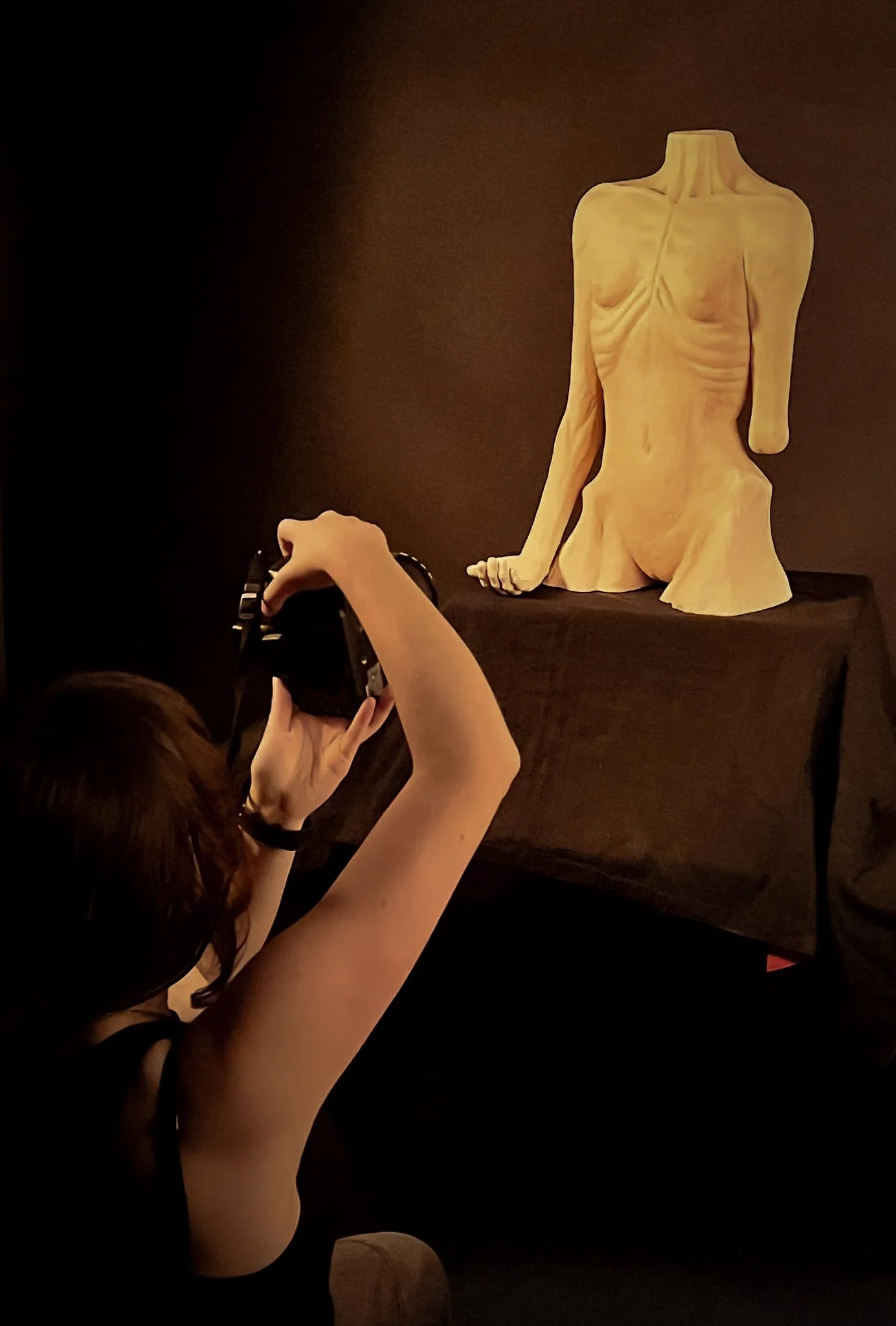
As I enter my third week of posting a new piece of artwork each week, I’ve found myself pausing to reflect on one of the most significant works I’ve ever created: Attenuated (2022), a clay sculpture that took me over 70 hours to complete. Revisiting this piece has reminded me of how far I’ve come, both as an artist and as a person.
Throughout my creative journey, one thing has always remained consistent: my desire to create art that expresses experiences, opinions, and issues that are deeply personal or socially relevant. My work has always been rooted in awareness, whether it’s shedding light on misunderstood topics or giving form to emotions that often go unseen.
With Attenuated, I wanted to express something intensely personal, my ongoing struggle with anorexia and eating disorders. It’s an experience that has shaped much of my life, and through this piece, I wanted to challenge the misconceptions that often surround it.
Eating disorders are widely misunderstood. The stereotype, that anorexia is simply about not eating in order to control body weight, barely scratches the surface. While that aspect exists, it’s only one layer of a far more complex and painful reality. The psychology behind anorexia often involves intrusive thoughts, fears, and deeply ingrained beliefs that go far beyond appearance.
In Attenuated, I sought to capture the fragility and vulnerability of someone caught in that struggle. The figure, a female form, weakened and reaching out for help with what little energy she has left, embodies both despair and a faint flicker of hope. Her missing arm and the leaning, fragile curvature of her spine reflect a body and mind deteriorating under immense pressure. The sculpture appears almost as though it’s falling apart, mirroring the internal disintegration so many experience in silence.
This misunderstanding of anorexia reminds me of how society often perceives self-harm. Many assume self-harm only manifests through visible injuries like cutting, but that’s not true, it can take many forms: scratching, burning, substance abuse, or other self-destructive behaviors. Similarly, anorexia has many variations, many faces, and many silent sufferers.
Through Attenuated, I hoped to spark awareness, to catch people’s attention long enough to make them question what they think they know. If even one person walks away with a broader understanding of what anorexia can look like, then I feel the piece has done its job.
Reflecting on this work now, in the third week of my ongoing posting project, I feel a mix of heaviness and gratitude. Heaviness, because revisiting Attenuated brings back memories of a difficult time in my life, but also gratitude, because it reminds me how far I’ve come. Art has given me a way to transform pain into something that can connect, educate, and hopefully heal, not just for myself, but for others who might see themselves in my work.
Art, at its core, is about empathy. And Attenuated remains one of my most personal attempts to turn pain into understanding.
With love and minerals,
Ellie Jane